Enzyme And Catalase: Specification Checklist for Textile Bleach Cleanup
Compare catalase enzyme specs for textile peroxide removal: pH, temperature, dosage, QC, COA/TDS/SDS, pilot validation, and cost-in-use.
For textile mills comparing peroxide neutralization options, catalase offers a controlled enzymatic route to remove residual hydrogen peroxide before dyeing.
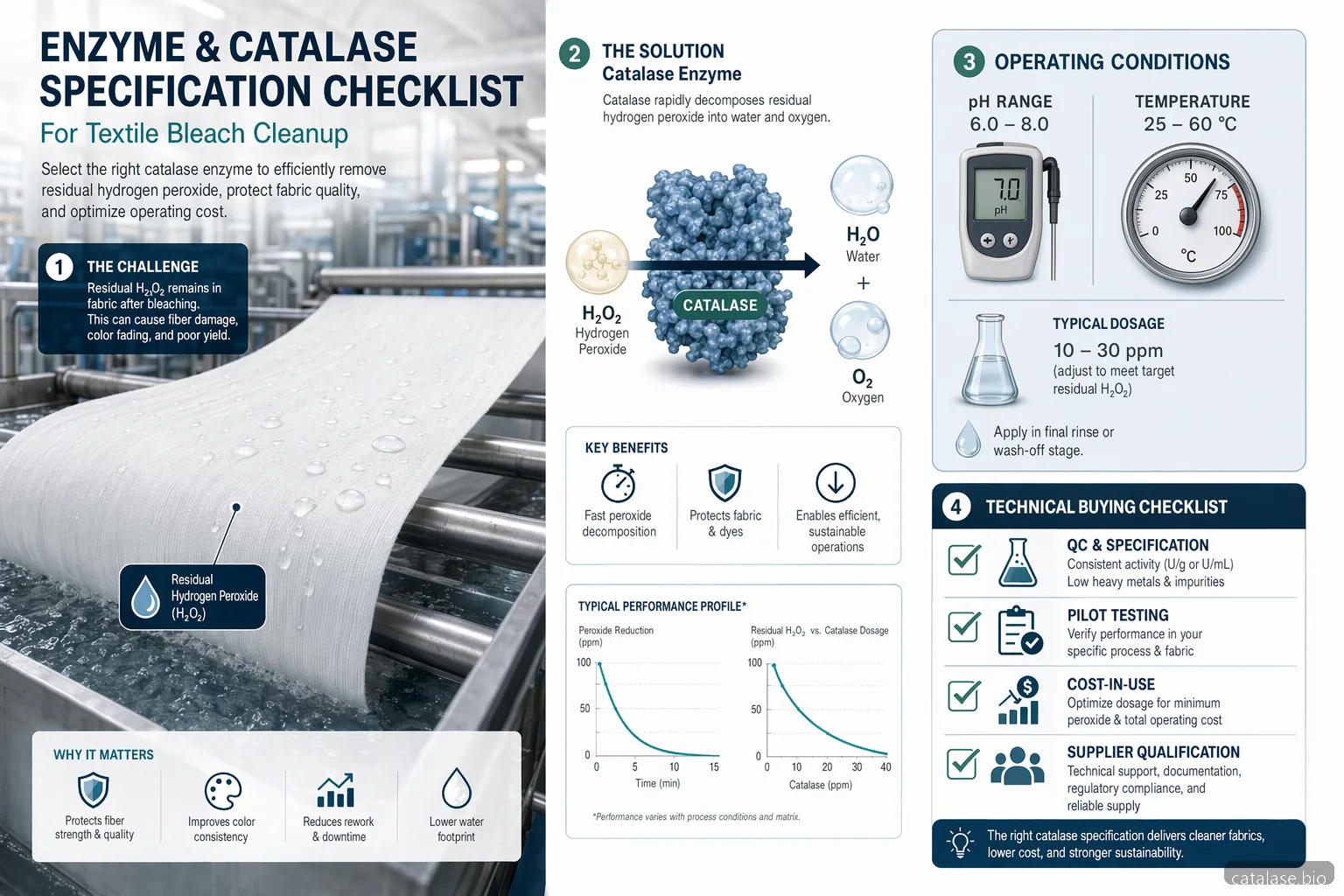
What the Catalase Enzyme Does in Bleach Cleanup
In textile preparation, hydrogen peroxide is widely used for bleaching cotton and blends. Before reactive dyeing or other downstream steps, residual peroxide must be removed because it can interfere with dyes, auxiliaries, and shade reproducibility. If the buyer asks, “is catalase an enzyme,” the practical answer is yes: catalase is an oxidoreductase enzyme that decomposes hydrogen peroxide into water and oxygen. This makes enzyme catalase different from chemical reducers, which may add salts, sulfites, or other reaction byproducts to the bath. For mills comparing enzyme and catalase options, the key issue is not only activity on paper, but performance under real machine conditions. The catalase enzyme substrate is hydrogen peroxide, so the enzyme must be dosed into a bath where peroxide concentration, pH, temperature, wetting agents, stabilizers, and liquor ratio are understood.
Primary function: hydrogen peroxide removal • Main substrate: hydrogen peroxide • Typical process position: after peroxide bleaching and before dyeing
Operating Conditions to Compare Before Buying
A useful catalase enzyme specification should identify the working pH and temperature range, not only the optimum point. Textile bleach cleanup often occurs around pH 6.0–8.5 after neutralization, though some processes may require performance at slightly wider conditions. Common operating temperatures are approximately 30–60°C, depending on fabric, machine type, and dwell time. Dosage is usually expressed as a percentage on weight of fabric, mL/L, or activity units per liter; practical trial bands may start around 0.05–0.30% owf or an equivalent supplier-recommended range. The best comparison is based on residual peroxide reduction at the intended dwell time, often 10–20 minutes, not on activity alone. When asking what does the enzyme catalase do, buyers should connect the answer to measurable production outcomes: faster bath preparation, fewer rinses, less reprocessing risk, and stable dyeing conditions.
Typical pH review band: 6.0–8.5 • Typical temperature review band: 30–60°C • Trial dosage: confirm with activity and bath conditions
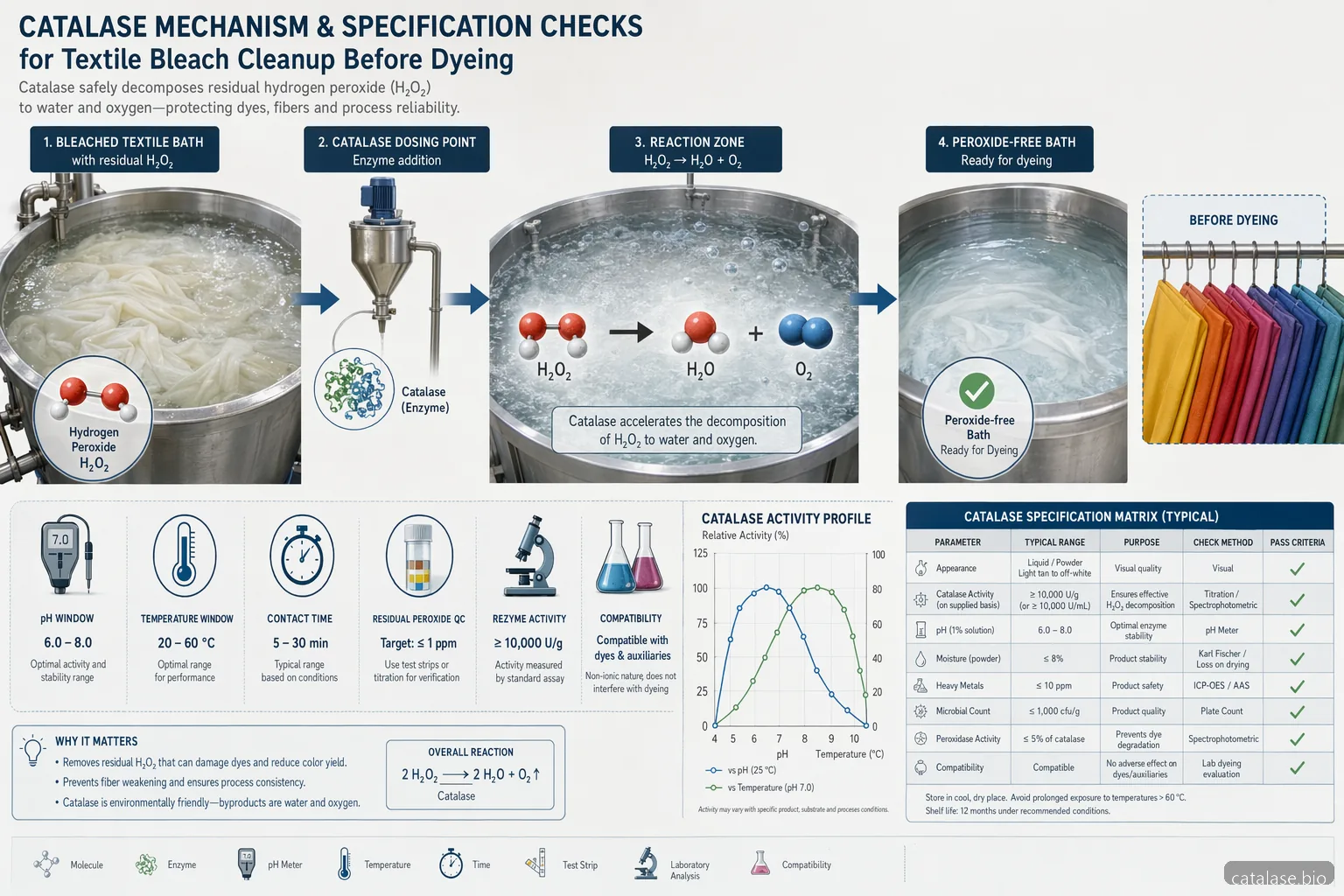
Specification Checklist for Technical Evaluation
When comparing enzymes and catalase products, request a current Technical Data Sheet, Safety Data Sheet, and Certificate of Analysis for the supplied batch. The TDS should state activity definition, recommended dosage, operating window, product form, dilution guidance, and storage conditions. The COA should identify batch number, activity or potency result, appearance, and any standard release tests used by the supplier. The SDS should cover handling, spill response, PPE, and transport classification where applicable. Buyers should also ask whether the product is liquid or powder, whether preservatives are present, and how long activity is retained after opening. What is catalase enzyme quality in a purchasing context? It is the combination of reproducible activity, documented handling requirements, and predictable process performance. Avoid relying on generic claims such as “high strength” unless they are tied to a clear activity method and pilot data.
Request COA for every batch • Check activity definition and test method • Confirm shelf life and storage temperature • Review SDS before plant trials
Pilot Validation and QC Checks
Before full adoption, run a structured pilot on the actual fabric, bleach recipe, machine type, liquor ratio, and downstream dye class. Measure residual hydrogen peroxide before catalase addition, after the selected dwell time, and before dyeing. Common QC checks include peroxide test strips or titration, bath pH, temperature, fabric whiteness, absorbency, bursting or tensile strength where relevant, and final shade after dyeing. Include a control process using the mill’s current peroxide removal method so cost-in-use and quality impacts can be compared. A strong pilot also records foam, odor, drain characteristics, compatibility with wetting agents, and any effect on dye fixation. If the buyer asks what is the catalase enzyme in this process, the pilot should demonstrate its role as a process aid for peroxide destruction, not as a dyeing auxiliary or softener.
Measure residual peroxide before and after treatment • Compare against current reducer or rinse process • Record shade, strength, absorbency, and foam • Validate before changing production recipes
Cost-in-Use and Supplier Qualification
The lowest price per kilogram is not always the lowest process cost. Catalase enzyme purchasing should compare delivered activity, dosage required, dwell time, water reduction, energy impact, reprocessing rate, and labor or machine utilization. A concentrated product may cost more per drum but less per batch if it reliably reaches the peroxide target at lower dosage. Supplier qualification should include technical responsiveness, lot traceability, lead time, packaging integrity, recommended storage, sample availability, and willingness to support pilot validation. Ask for realistic dosage guidance for textile bleach cleanup rather than a generic enzyme brochure. For B2B buyers evaluating enzyme and catalase suppliers, the final decision should combine documentation, plant trial data, risk control, and total cost-in-use. This approach supports repeatable production instead of one-time lab performance.
Compare cost per treated batch, not only unit price • Confirm lot traceability and sample support • Assess lead time, packaging, and storage needs • Use pilot results to set production dosage
Technical Buying Checklist
Buyer Questions
Yes. Catalase is an enzyme used as a process aid to break down residual hydrogen peroxide after peroxide bleaching. In textile bleach cleanup, it helps prepare the bath and fabric for dyeing by reducing peroxide that could interfere with color development. Buyers should evaluate the catalase enzyme by activity, pH and temperature fit, dosage, documentation, and verified plant performance.
The catalase enzyme substrate is hydrogen peroxide. Catalase acts on hydrogen peroxide and converts it into water and oxygen. For textile buyers, this means the enzyme should be evaluated by how quickly and completely it reduces residual peroxide under the mill’s actual pH, temperature, dwell time, liquor ratio, and chemical package, not only by catalog activity.
The enzyme catalase removes hydrogen peroxide through enzymatic decomposition, while chemical reducers remove peroxide through chemical reactions that may introduce additional salts or byproducts. Catalase can support shorter cleanup steps and fewer rinses when validated properly. The best option depends on fabric type, dyeing requirements, wastewater goals, dosage cost, and the mill’s required residual peroxide limit.
Request a Technical Data Sheet, Safety Data Sheet, and Certificate of Analysis for the supplied batch. The TDS should include use range, dosage guidance, storage, and activity information. The SDS supports safe handling and spill planning. The COA confirms batch identity and release data. These documents are essential for supplier qualification and controlled plant trials.
Run a pilot using actual production fabric, bleach conditions, auxiliaries, and machine settings. Measure residual hydrogen peroxide before treatment, after catalase treatment, and before dyeing. Compare shade, absorbency, strength, foam, dwell time, and total cost against the current process. Use the pilot data to set dosage, QC limits, and acceptance criteria before full-scale adoption.
Catalase for Research & Industry
Need Catalase for your lab or production process?
ISO 9001 certified · Food-grade & research-grade · Ships to 80+ countries
Frequently Asked Questions
Is catalase an enzyme used in textile processing?
Yes. Catalase is an enzyme used as a process aid to break down residual hydrogen peroxide after peroxide bleaching. In textile bleach cleanup, it helps prepare the bath and fabric for dyeing by reducing peroxide that could interfere with color development. Buyers should evaluate the catalase enzyme by activity, pH and temperature fit, dosage, documentation, and verified plant performance.
What is the catalase enzyme substrate in bleach cleanup?
The catalase enzyme substrate is hydrogen peroxide. Catalase acts on hydrogen peroxide and converts it into water and oxygen. For textile buyers, this means the enzyme should be evaluated by how quickly and completely it reduces residual peroxide under the mill’s actual pH, temperature, dwell time, liquor ratio, and chemical package, not only by catalog activity.
What does the enzyme catalase do compared with chemical reducers?
The enzyme catalase removes hydrogen peroxide through enzymatic decomposition, while chemical reducers remove peroxide through chemical reactions that may introduce additional salts or byproducts. Catalase can support shorter cleanup steps and fewer rinses when validated properly. The best option depends on fabric type, dyeing requirements, wastewater goals, dosage cost, and the mill’s required residual peroxide limit.
What documents should be requested before buying catalase enzyme?
Request a Technical Data Sheet, Safety Data Sheet, and Certificate of Analysis for the supplied batch. The TDS should include use range, dosage guidance, storage, and activity information. The SDS supports safe handling and spill planning. The COA confirms batch identity and release data. These documents are essential for supplier qualification and controlled plant trials.
How should a mill validate enzyme and catalase performance?
Run a pilot using actual production fabric, bleach conditions, auxiliaries, and machine settings. Measure residual hydrogen peroxide before treatment, after catalase treatment, and before dyeing. Compare shade, absorbency, strength, foam, dwell time, and total cost against the current process. Use the pilot data to set dosage, QC limits, and acceptance criteria before full-scale adoption.
Related: Catalase for Peroxide Removal at Working Temperatures
Turn This Guide Into a Supplier Brief Request a catalase specification review and pilot trial plan for your textile bleach cleanup process. See our application page for Catalase for Peroxide Removal at Working Temperatures at /applications/activity-temperature-catalase/ for specs, MOQ, and a free 50 g sample.
Contact Us to Contribute